family · 8 min read
Why Kids Ask 'Why' So Often, and 7 Things Researchers Learned From Preschool Questions
Preschoolers ask questions by the dozen every hour. Seven research findings on why kids ask why and how parents can answer.
By Porch Daily editors · Updated October 2026

Why does the moon follow the car? Why can’t the dog have grapes? Why is Grandpa’s hair white when yours is brown? If you live with a preschooler, you’ve probably fielded a few of these before breakfast, along with the follow-up to each one.
It can feel like a stalling tactic, especially at bedtime.
The psychologists who have recorded these talks word for word read the transcripts differently. Your 4-year-old is running a small research project, and the way you answer decides whether it moves on or circles back to the same question.
1. Preschoolers ask dozens an hour
In 2007 the developmental psychologist Michelle Chouinard published a long report called Children’s Questions: A Mechanism for Cognitive Development in the Monographs of the Society for Research in Child Development. For her first study, she went through recorded home conversations of four children, kept in a shared research archive called CHILDES, and tallied every question they asked from a little past age 1 to a little past age 5.
Most of those questions were real requests for information, as opposed to bids for attention or permission. They came at an average of 76 an hour, as a 2009 paper in the journal Child Development summed up her results.
If your kitchen sounds like a quiz show some mornings, you aren’t imagining it.
Real animals, deeper questions
Chouinard also had 112 parents walk their 2-, 3- and 4-year-olds past animals. Children who saw real animals asked more of the deep questions, the how-do-they-grow kind, than children who were shown drawings or 3D models. If you want better questions this weekend, a duck pond will beat a picture book about ducks.
2. A real answer ends the loop
Two years later, Brandy Frazier, Susan Gelman and Henry Wellman of the University of Michigan tested what happens after the question, in the moment when you’re the one who has to answer. They sat 42 children, ages 3 to 5, in a quiet room at their preschools and showed them odd things on purpose. There was a box of crayons that were all the same color, a hat with a hole in it, and a picture of a bird’s nest holding two baby birds and a turtle.
When a child asked why, the researcher took turns between a real explanation and a scripted non-answer. One non-answer went, “You’re right, there is a turtle in that bird’s nest.”
After a non-answer, children asked the same question again 21.4 percent of the time. After an explanation, they re-asked only 1.2 percent of the time.
The children who heard a non-answer were the ones who circled back to the same question.
A real explanation also led to new questions. Children asked a fresh follow-up after an explanation 21.4 percent of the time, against 6.6 percent after a non-answer.
The same pattern at home
The team also read home transcripts of six children recorded between ages 2 and 4, the kind of ordinary talk you’d hear over lunch at your own table. In those talks, adults gave a real explanation to only 36.7 percent of the children’s how and why questions. After a non-answer, the children re-asked 24.0 percent of the time, compared with 9.4 percent after an explanation.
3. Why questions climb after age 3
If your child seemed to switch from “what’s that?” to “why?” almost overnight, the transcripts back you up. In Chouinard’s recordings, only 4 percent of the questions children asked between age 2 and 2 and a half were requests for an explanation. By age 5, explanation requests made up 30 percent, and each of the four children showed a jump around age 3.
The questions you hear get sharper, too. In the Michigan home transcripts, 53.6 percent of the 2-year-olds’ how and why questions named what they were about, as in “why is the dog barking?” instead of a bare “why?” By age 4, 79.2 percent did.
Answers get scarcer
The grown-ups in those recordings moved the other way. They answered with an explanation 40.7 percent of the time when the children were 2, and 30.7 percent of the time when they were 4.
4. They want the answer, not the attention
If questions were only a way to keep you talking, any reply you gave would satisfy a child. Chouinard found the opposite in her transcripts, where children asked the same question again far more often after an uninformative reply than after a useful one. The Michigan team saw the same thing in children as young as 2.
The hidden-object test
Her fourth study is the cleanest test you could ask for. She hid one of two possible objects in a box and asked 67 four-year-olds to work out which one it was. Half of them could ask the researcher questions, and those children were more likely to name the right object.
They asked smart questions, too. Chouinard reports they were as likely to ask about something hidden, such as “does it purr?”, as about something they could have checked by looking, such as “is it purple?”
When your child repeats a question word for word, think back to what you said the first time.
5. Let’s find out counts as an answer
In the Michigan team’s coding of home talk, an “I don’t know” counted as a non-answer, alongside a bare “Because” and a change of subject. The authors wondered whether closed replies like those might discourage further questions, though they flagged it as an idea for future research and didn’t test it.
The lab study’s non-answers were gentler than a shrug. The researchers wrote four kinds, and you’ll probably recognize a few of your own.
A plan after I don’t know
An honest “I don’t know” is fine when you follow it with a plan. “I don’t know, let’s find out” turns a non-answer into an explanation that arrives later, whether you look it up together, test it at the sink or save it for the next vet visit.
That follow-through varies a lot from home to home. In a 2018 Child Development study of 37 four-year-olds recorded at home, Katelyn Kurkul of Merrimack College and Kathleen Corriveau of Boston University found that children in different families asked a similar share of questions. What differed was how often a caregiver met a causal question with a real explanation that didn’t go in a circle.
6. Asking back helps them learn
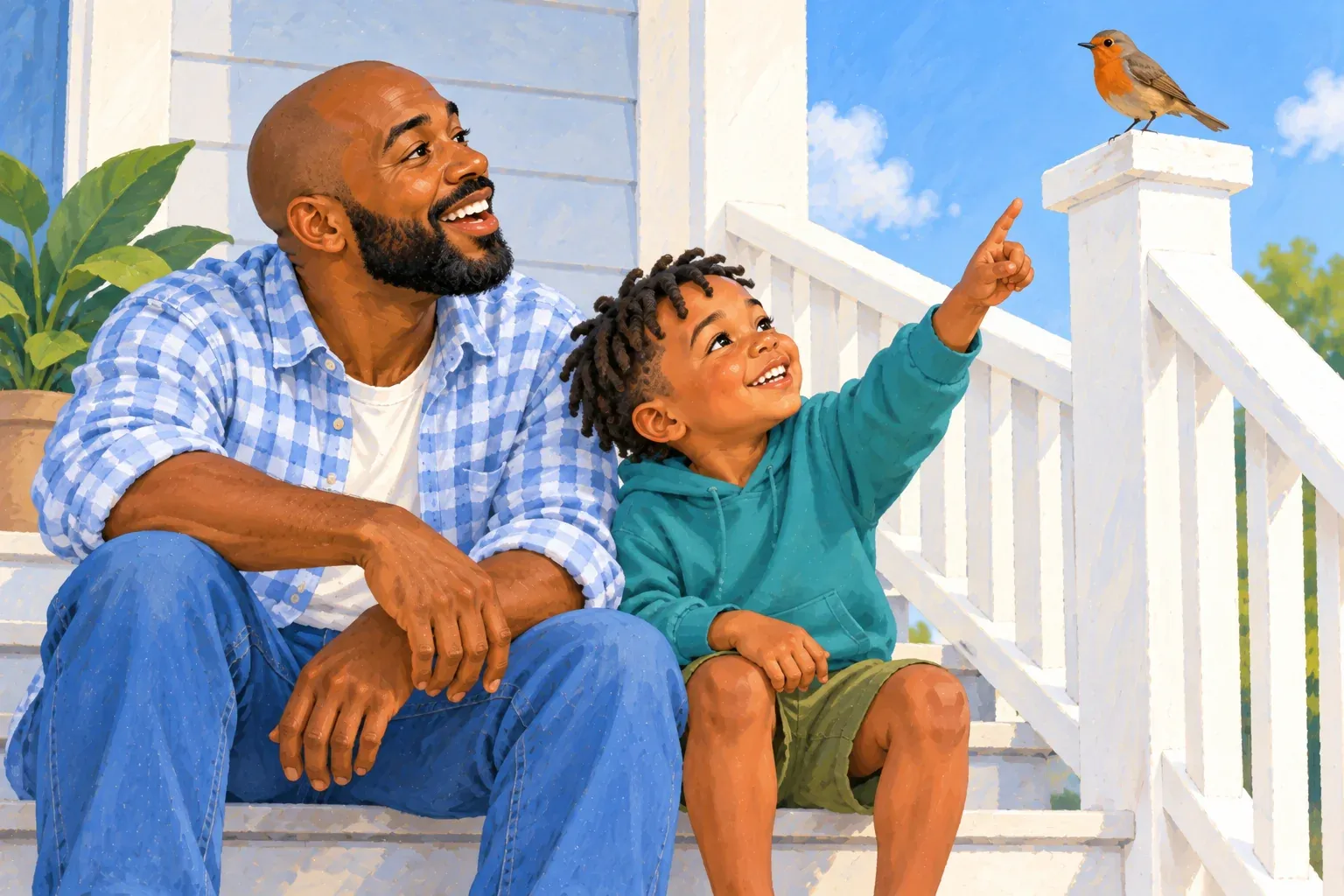
The Michigan paper quotes a moment you may have lived through yourself. A boy named Abe asks his father why a character on a book cover is pouring yellow paint into a can of green paint. His father says “I don’t know, that sure isn’t very smart,” then asks, “Why do you think he’s doing that?”
The authors point to that kind of reply as a sign of a shift you can expect with age. In the home transcripts, offering an explanation of their own became more common with age for 5 of the 6 children, and your job can move from handing over answers to helping your child build one.
Better for why than for facts
The same study found a catch. Explaining didn’t help children remember surface details that had nothing to do with how the toy worked, and in the youngest children it sometimes hurt that memory. Asking back helps your child understand how something works, and it does less for remembering what that thing looked like.
7. The questions thin out with age
A chatty preschooler often gets quieter once school starts, and the counts show it.
Barbara Tizard and Martin Hughes recorded 30 girls just under age 4 at home and at nursery school, and in their book Young Children Learning they report that the girls averaged 26 questions an hour at home with their mothers.
Fewer in the classroom
In a 2013 article for Educational Leadership, the Williams College psychologist Susan Engel described her own 2006 classroom observations. In kindergarten, any two-hour stretch held 2 to 5 questions or explorations. In fifth grade, a typical two-hour stretch often didn’t yield a single question from a student.
| Who was counted | How many questions |
|---|---|
| Four children at home, ages 1 to 5 (Chouinard) | 76 information questions an hour |
| 30 girls just under 4, at home with their mothers (Tizard and Hughes) | 26 questions an hour |
| Kindergarten classrooms (Engel) | 2 to 5 questions or explorations in two hours |
| Fifth-grade classrooms (Engel) | Often none in two hours |
Each study counted in its own way, so compare the rows loosely.
None of these studies counted adults, so there’s no matching figure for grown-ups.
When the next why comes
In the Michigan lab, a real explanation cut re-asking from 21.4 percent to 1.2 percent, and Abe’s father showed that the road to one can start with the child’s own guess. The next time your kid asks you why, ask “What do you think?” first, listen to the whole theory, and then give your best real answer, even if it begins with “I don’t know, let’s find out.”