health · 6 min read
Sit All Day? A Ten-Minute Walk After Dinner Is the Easiest Place to Start
Sitting all day? A short walk after meals is an easy place to start moving more. Five steps to make it a daily habit.
By Porch Daily editors · Updated October 2026
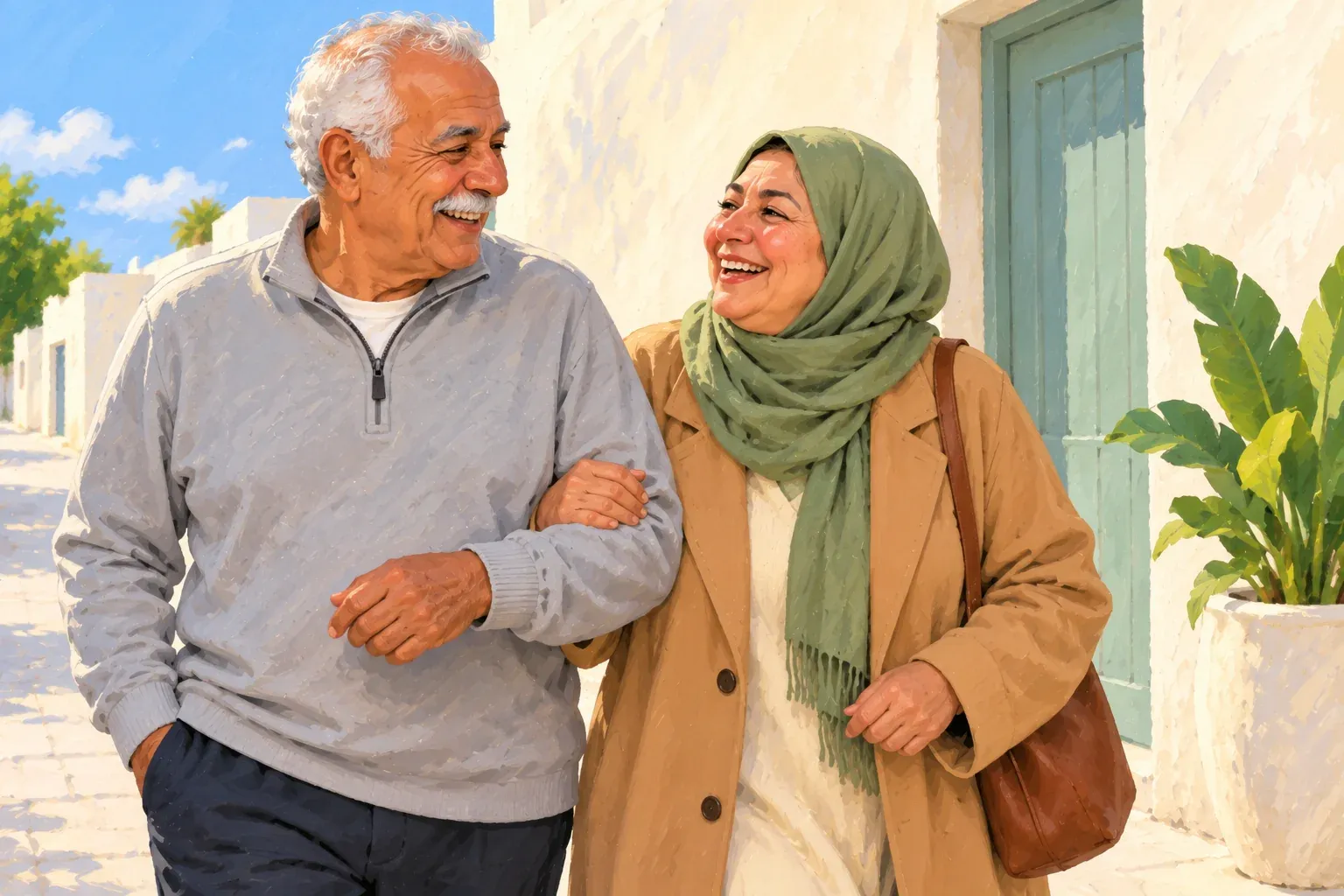
In 2024, just 47.2 percent of American adults got as much aerobic activity in their free time as federal guidelines recommend, according to a National Center for Health Statistics report published in April 2026. For adults 65 and older, the share fell to 38.4 percent.
If your day runs from a desk chair to a car seat to the couch, a gym plan is a hard place to begin. A short walk after dinner is easier to keep, since dinner already happens every day, at about the same time, whether you feel motivated or not.
Ten minutes counts toward the goal
The U.S. Department of Health and Human Services sets the target in its Physical Activity Guidelines for Americans, second edition, published in 2018. Adults should get at least 150 to 300 minutes a week of moderate activity, and brisk walking is the example most people can manage.
The second edition also dropped an old rule. The first edition, from 2008, counted only activity done in stretches of 10 minutes or more. The update says any amount of physical activity has some health benefits, and it lists a few that show up soon after a single session, including less anxiety and better sleep quality. A short walk to the corner and back now counts.
Brisk means your breathing picks up while you can still hold a conversation. An easy stroll still gets you out of the chair, which the guidelines also want, though the brisk minutes are the ones that add up toward 150.
Do the math on a single 10-minute walk after dinner, every night, and you reach 70 minutes by Sunday. Add a 10-minute walk after lunch on 5 workdays and the week climbs to 120. One 30-minute walk on a Saturday morning closes the gap to 150.
Why the walk goes after a meal
In August 2022, researchers at the University of Limerick in Ireland published a review in the journal Sports Medicine. They pooled seven small trials in which adults spent a day either sitting for long stretches or breaking up the sitting with short bouts of standing or light walking, then measured their blood sugar after meals.
Light walking was linked to a smaller rise in blood sugar and insulin after eating than sitting straight through. It also did better than standing. Most volunteers carried extra weight, and each trial lasted a single day, which makes the finding a short-term effect seen under lab conditions.
Treat it as a short-term effect that researchers measured over hours. It isn’t a treatment for anything.
If you have a heart or lung condition, diabetes, joint pain, or you haven’t been active in a long time, talk to your doctor before you start. Ask how brisk is safe for you and whether any medicine you take changes the timing.
1. Pick the meal you never skip
For most households that’s dinner, but it can be any meal you eat at home on most days. If you work evenings, breakfast or a lunch break will hold up better.
The reason to tie the walk to a meal comes from habit research. In a 2010 study in the European Journal of Social Psychology, Phillippa Lally and colleagues at University College London asked 96 volunteers to pick one new daily behavior and do it after the same cue, such as after breakfast. The typical time before it felt automatic was 66 days, with individual times running from 18 to 254 days. Missing a single day didn’t set people back in any real way.
A meal works well as a cue since it shows up every day without a reminder.
Before your next dinner, you should be able to name the exact moment you’ll leave, such as when the last plate goes in the sink.
2. Map a ten-minute loop from your door
You don’t need a park or a trail. Walk 5 minutes in one direction, turn around, and walk 5 minutes back. The first time, notice where you are at the 5-minute mark and make that your turnaround spot.
| Where you live | A 10-minute route | What to watch for |
|---|---|---|
| City blocks | Around your block twice, or out to the nearest corner store and back | Crossings with long lights, which add minutes |
| Suburb | Down your street to the first cross street and back | Stretches with no sidewalk, where you walk facing traffic |
| Apartment building | Hallway laps on your floor, plus a few flights of stairs | Rest on a landing if your knees complain |
| Small town or rural road | Out along the road to a mailbox or a fence post and back | Fast cars and no shoulder, so wear something light-colored |
Turning around at the halfway point means the route is the same length every night, with no app or map involved.
After one trip, you’ll know the turnaround spot by sight and won’t need to check the time again.
3. Bring one person, or the dog
A walk is harder to skip when someone else is waiting at the door with their shoes on. Ask a partner, a teenager, a neighbor or a friend who lives close enough to meet you at the corner. Ten minutes side by side is also a good time to talk about the day.
A dog helps even more. In a 2019 study in the journal Scientific Reports, University of Liverpool researchers surveyed 385 households in West Cheshire, England. Dog owners were about four times as likely as people without dogs to reach 150 minutes of activity a week.
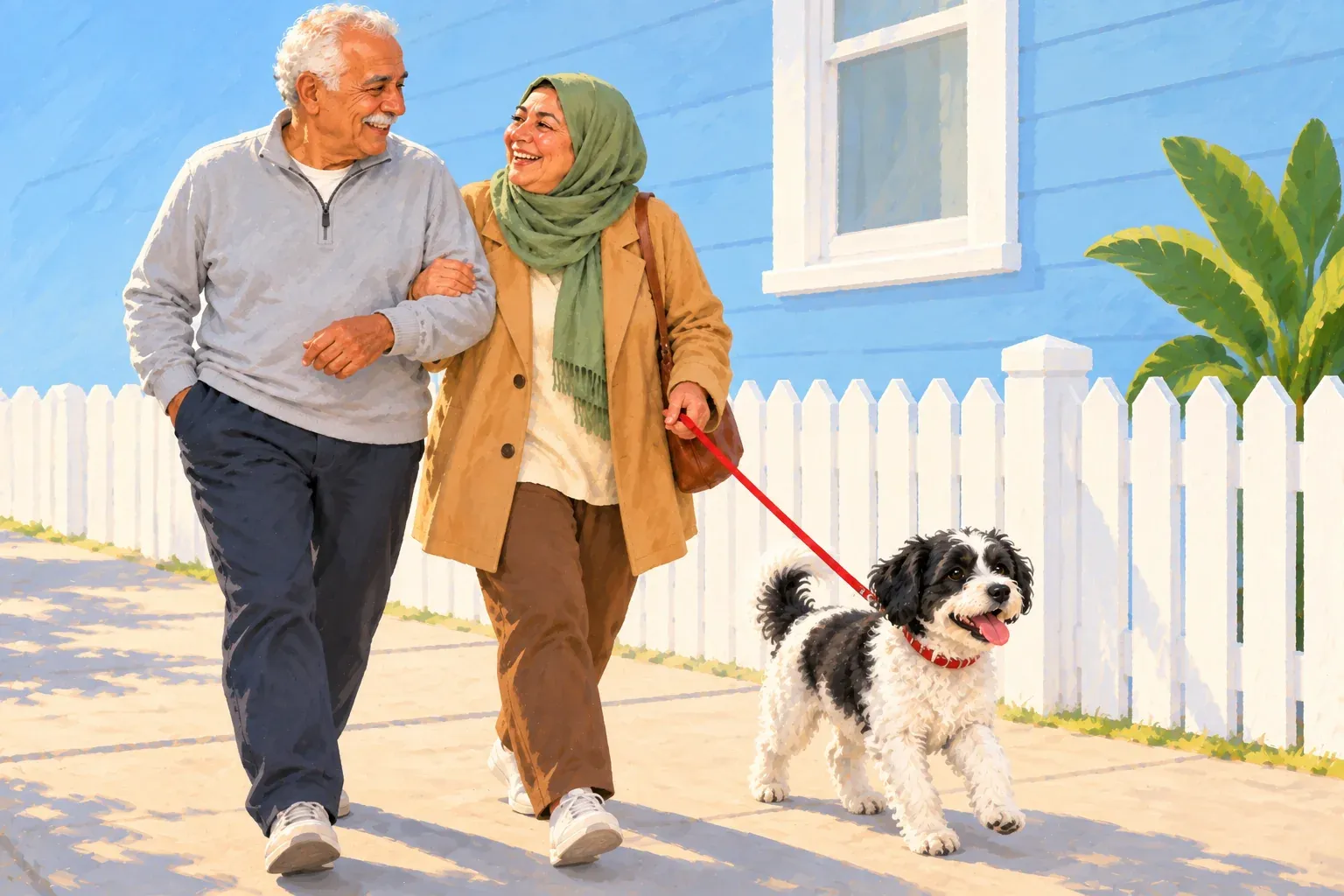
Aim for one walking companion, two legs or four, who will notice the evening you stay on the couch.
4. Plan the bad-weather version now
Rain, summer heat and early dark are the easiest excuses for skipping a walk that’s only a few weeks old. Daylight saving time ends on Sunday, November 1, 2026, and in much of the country the sky will be dark by dinner after that.
Pick your backup this week, before you need it. Indoor options include hallway laps, a few trips up and down your stairs, or a lap of a store you were driving to anyway. For dark evenings, wear a light jacket or a reflective band and stick to streets with lights.
Write the backup on a sticky note and put it on the fridge. When the weather turns, you’ll know what to do without deciding again.
5. Add a second walk later in the week
Give the dinner walk a few weeks before you add anything.
When skipping it starts to feel strange, you’re ready for a second one.
Pick a second slot that’s also tied to something you already do. A 10-minute walk after lunch on workdays works well, and so does a longer walk on Saturday morning before the errands.
Put the second walk on your calendar with the same weight as an appointment, then keep both going for two weeks.
Out the door tonight
10 minutes after dinner tonight is the whole first step. Put your shoes by the door before you sit down to eat, tell whoever is at the table that you’re heading out, then walk to the end of the street and back. Do the same thing tomorrow, at the same point in the evening.