home · 8 min read
Front Porch History in 8 Moments: West African Roots to the Pandemic Comeback
Why American houses grew porches, why so many vanished after the war, and how they came back. A short, sunny history of the front porch.
By Porch Daily editors · Updated October 2026
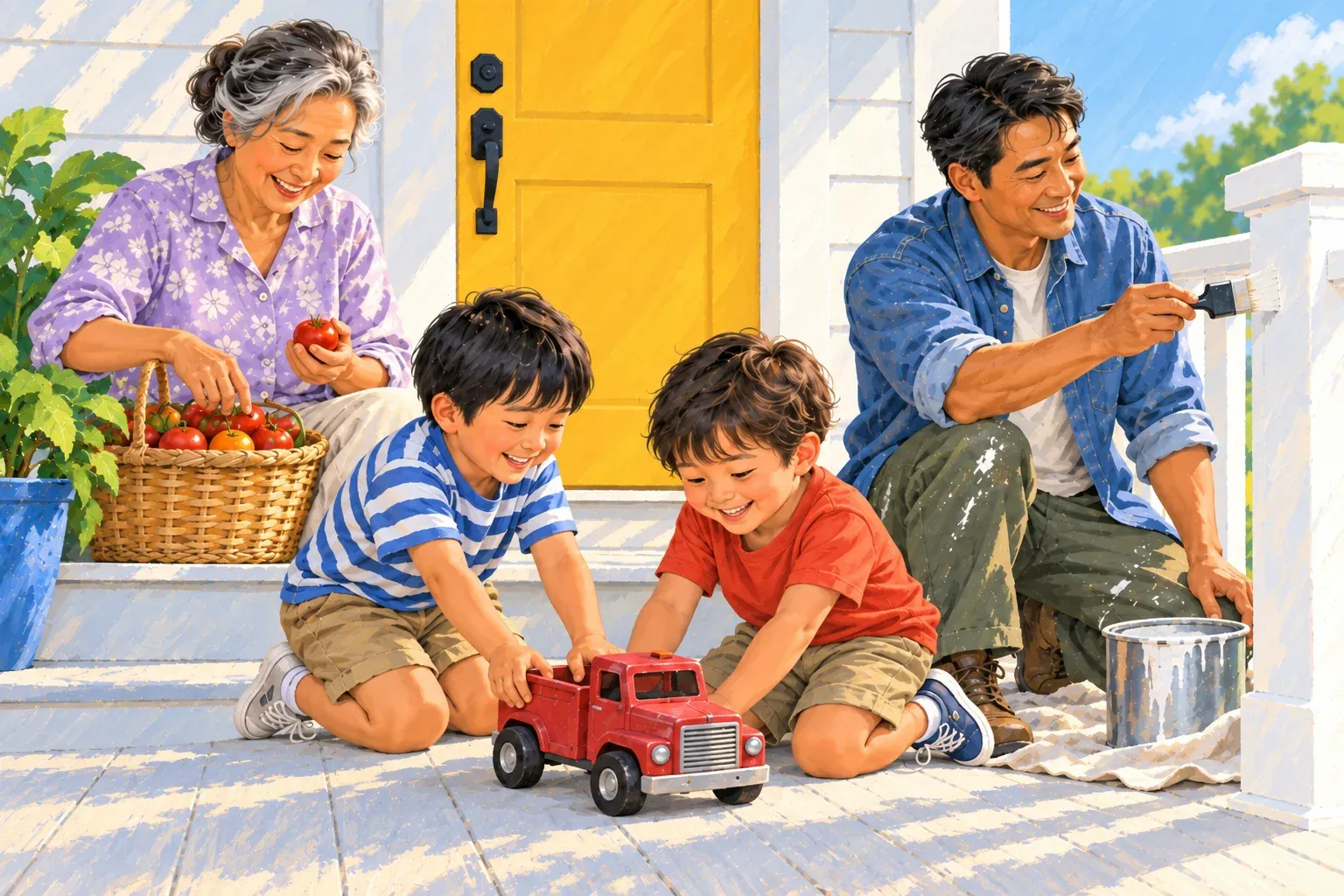
A front porch is an odd thing to build. It’s a room with no walls, stuck to the side of the house that faces strangers. Americans have added porches, torn them off, glassed them in and finally written them into town building codes, and every one of those swings followed a change in how people wanted to live next to each other.
Here are eight moments in that story, from New Orleans shotgun houses to the porch portraits of spring 2020, with the dates historians agree on and a note where they still argue.
1. Shotgun houses put porches on sidewalks
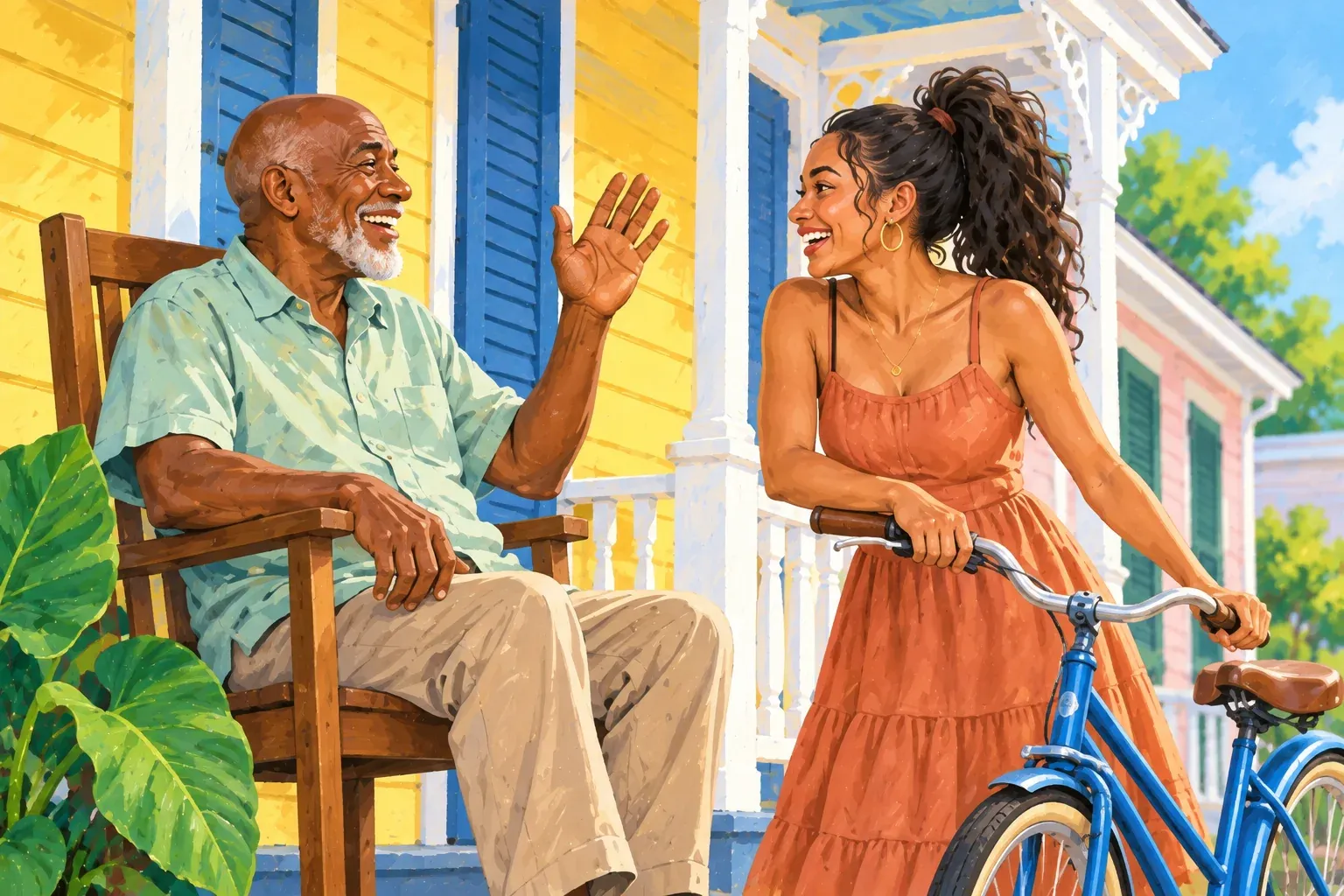
A shotgun house is one room wide and several rooms deep, with the doors lined up front to back. In New Orleans, many have a small front porch right at the sidewalk, close enough to chat with anyone walking past.
In 1976 the folklorist John Michael Vlach published a paper called “The Shotgun House: An African Architectural Legacy,” which traced the form back through Haiti to West Africa. Part of his case was timing. In 1809 more than 9,000 refugees from the Haitian Revolution arrived in New Orleans by way of Cuba, nearly doubling the city’s population, according to 64 Parishes, Louisiana’s online encyclopedia.
Not every scholar accepts every link in that chain. Vlach’s idea that the name “shotgun” grew out of a Yoruba word for house is still a guess. The larger point has held up, though. The porch facing a Southern street owes a debt to Black and Caribbean builders.
2. Pattern books sold the veranda
In 1842 the landscape designer Andrew Jackson Downing and the architect Alexander Jackson Davis published Cottage Residences, a book of house designs for families who wanted something nicer than a plain box. It stayed in print for the rest of the century.
Downing kept pushing the porch, which he called the veranda or the piazza, and he thought a family with money for one nice feature should spend it there. In his 1850 book The Architecture of Country Houses, he wrote that “a much higher character is conferred on a simple cottage by a veranda than by a highly ornamental gable.”
Pattern books did the job a home magazine or a house-tour video does for you now. A carpenter in a small town could copy a design drawn in New York, and over a few decades the porch became part of what a decent house was supposed to look like.
3. Railroads delivered the gingerbread
After the Civil War, fancy porch trim got cheap. Steam-powered mills with scroll saws and jigsaws turned out brackets, spindles and lacy cut-out boards by the thousands, and the growing railroads hauled them by the boxcar to towns that had never had a woodcarver.
That’s how a farmhouse on the plains could end up with the same curly brackets as a house in New England. By the early 1900s, millwork catalogs offered dozens of stock baluster patterns, so an owner could pick porch railings the way you’d pick wallpaper.
The porches got bigger too. Queen Anne houses of the 1880s and 1890s often had a porch that wrapped around two sides, with room for a swing at one end and a table at the other. Walk the oldest streets in your town and you can often spot them by a round corner tower and a porch that turns the corner with it.
4. Bungalows made the porch a room
The word bungalow comes from the Hindi word bangla, meaning “belonging to Bengal.” British officials in India used it for low, one-story houses wrapped in verandas.
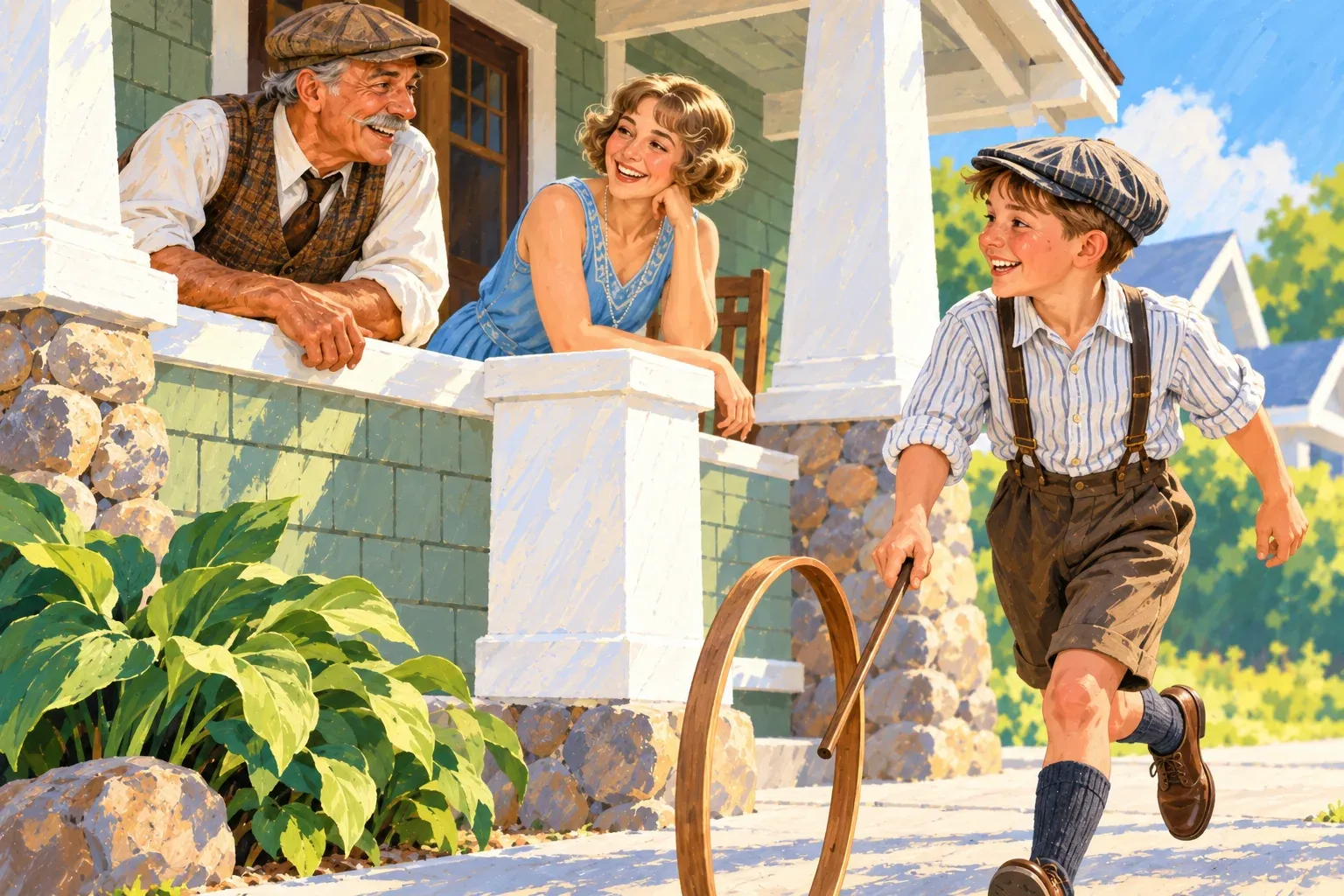
The bungalow took off in America in the early 1900s. The furniture maker Gustav Stickley promoted it in his magazine, The Craftsman, which ran from 1901 to 1916, as an honest, simple house for working families. Most bungalows had a deep front porch under a wide, low roof, often held up by thick tapered columns on stone or brick piers.
Bungalows were cheap enough that some families bought them from mail-order kit-house catalogs and had the precut, numbered pieces shipped by rail. On summer evenings, before anyone had air conditioning, the porch was often the coolest spot the family had.
If your town has a street of low houses with fat, tapered porch columns, odds are good they’re bungalows from these years.
5. Cars, TV and air conditioning pulled people inside
After World War II, three machines changed how families spent their evenings.
The car came first. Streets got louder and faster, and new suburban houses often put a garage or a driveway where the porch might have gone.
Then came television. In the 1960 census, more than 46 million of the country’s 53 million occupied homes had at least one TV set, according to the Census Bureau. The evening show moved from the street to your grandparents’ living room.
Air conditioning came last. Census records show that the share of homes with any air conditioning more than quadrupled between 1960 and 1980. Once the inside of the house was the cool place, people had far less reason to sit out front.
Out to the backyard patio
In 1975 the historian Richard H. Thomas wrote an essay called “From Porch to Patio” for The Palimpsest, a magazine of the State Historical Society of Iowa. His point was that families didn’t stop going outside. They went out back.
From the porch, you could call a passerby up for a long talk, and the family stayed in charge of the visit. From a backyard patio, he noted, it’s hard to greet a stranger at all.
6. Planned towns required porches again
In 1978 Robert Davis inherited 80 acres on the Florida Panhandle. With the architects Andrés Duany and Elizabeth Plater-Zyberk, he toured old Southern towns, and in 1981 work began on a beach town called Seaside. Its building code required every house to have a porch facing the street. The first goal was to cut down on air conditioning.
The social side came as a bonus. Plater-Zyberk told NPR in 2006 that people sat on the front porch instead of in the backyard because they could see people coming and going, say hello and have short conversations. If you’ve seen the 1998 movie The Truman Show, you’ve seen Seaside, which played the too-perfect hometown.
Seaside helped start a planning movement called New Urbanism. Kentlands, in Gaithersburg, Maryland, followed in the late 1980s, and dozens of towns after it were laid out with sidewalks, houses close to the street and porches you could talk across.
7. 2020 made porches into studios
The lockdowns of spring 2020 put people back on their porches almost overnight. A porch was one of the few places where you could be outdoors, at home and near other people at a safe distance.
In Needham, Massachusetts, the family photographer Cara Soulia began shooting portraits of families on their front steps in mid-March 2020, with her friend Kristen Collins handling the scheduling. In about two weeks, she and two other photographers took pictures of roughly 500 families, Boston magazine reported. The families gave donations to the Needham Community Council, which runs the town’s food pantry. Photographers across the country copied the idea within weeks.
Porch music already had a festival
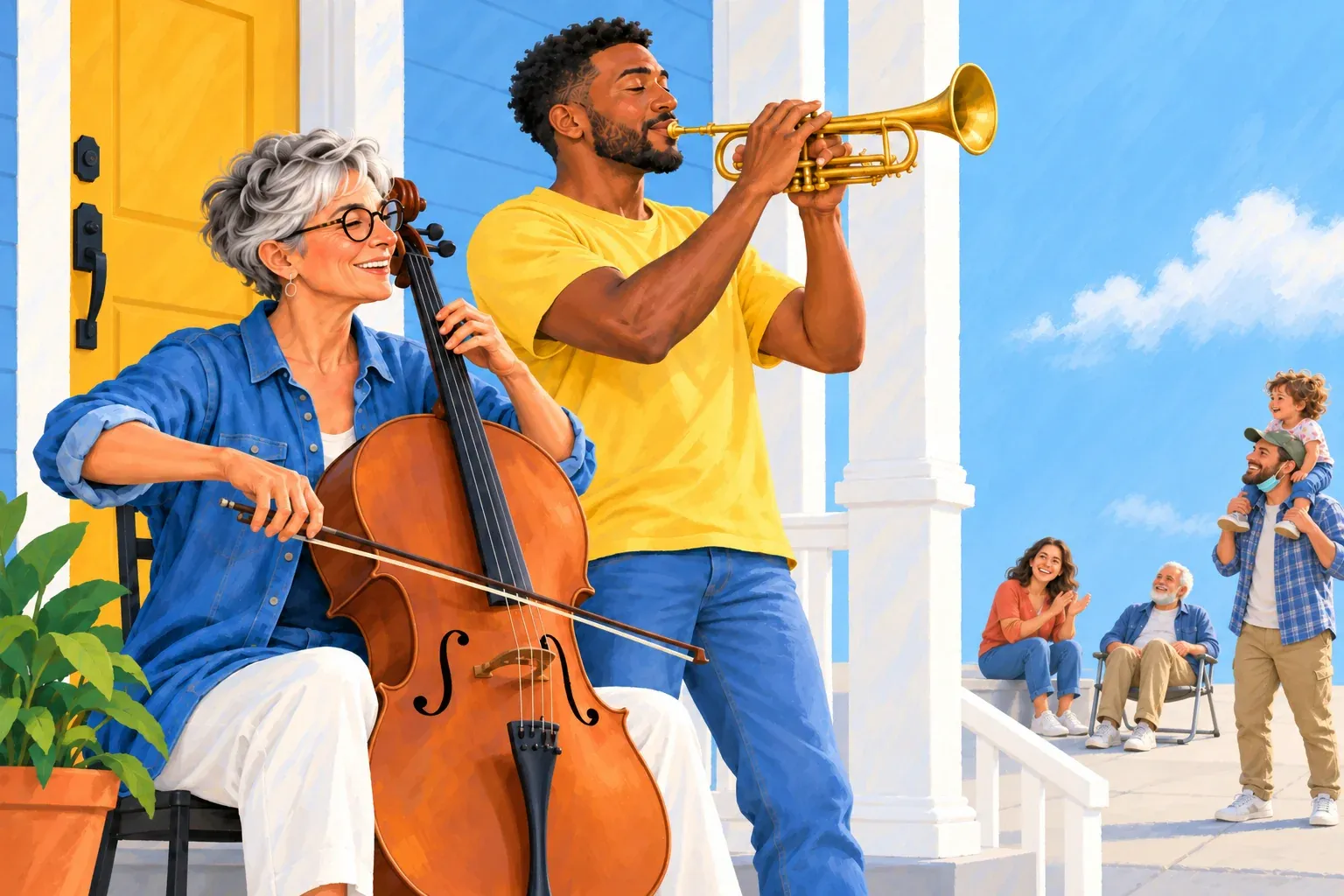
The first Porchfest, in Ithaca, New York, began in 2007 with about 20 bands after two neighbors got talking about outdoor music. When Ithaca’s festival paused for two years during the pandemic, musicians around the country played anyway, one porch at a time, for whoever stood on the sidewalk.
8. Stoops and balconies do the job
You don’t need a porch for any of this. The word stoop comes from the Dutch stoep, a leftover from the colony that became New York, where row-house steps have long been a meeting spot.
Windows and balconies count too. On March 13, 2020, days into Italy’s lockdown, Canada’s Global News shared video of neighbors in Siena singing together from their windows.
Builders still like a porch. Of the roughly 1 million single-family homes started in the United States in 2024, 67.2 percent had one, according to the National Association of Home Builders’ analysis of Census Bureau construction data.
On your way out today
Pick one neighbor whose name you don’t know yet, like the man with the beagle or the woman who grows tomatoes by her front steps. Next time you pass, say hello and ask their name.
The time after that, use it, whether you’re on your porch, your stoop or the sidewalk in front of their door.